AI Integration · Brand Strategy
The MBUX Illusion: Press Releases, Cloud Banter, and the Cockpit Reality
By Victor · 8 min read
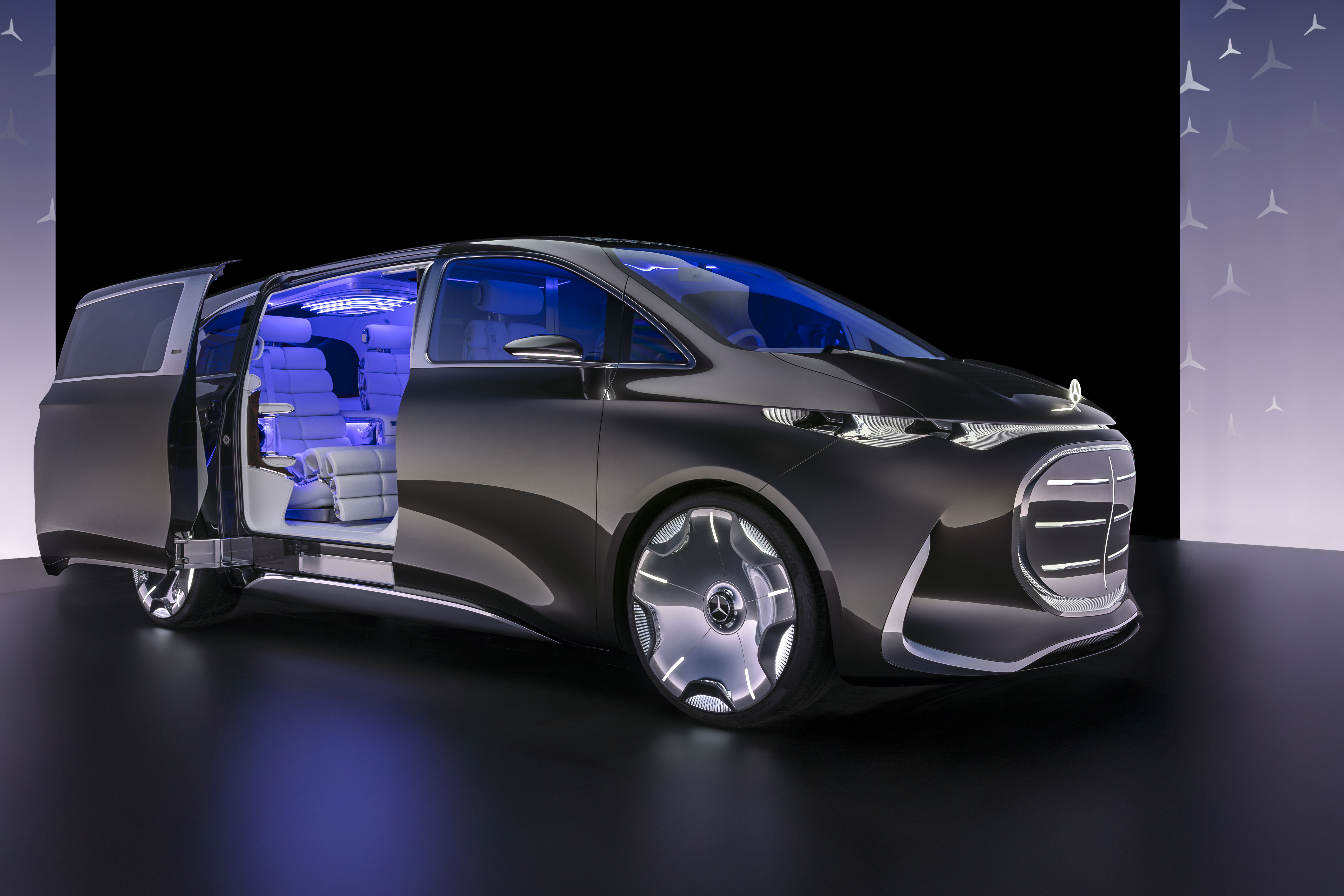
When Mercedes-Benz announced the deployment of ChatGPT across more than 900,000 vehicles in North America, the automotive press treated the rollout as a watershed moment. By connecting its MBUX voice assistant to Microsoft’s Azure OpenAI Service, the Stuttgart automaker promised to replace rigid voice commands with fluid conversation. Drivers would no longer need to memorize specific syntax to operate their cars. Instead, “Hey Mercedes” was marketed as an intuitive digital butler capable of answering history questions, brainstorming dinner recipes, and conducting multi-turn dialogue.
As a public relations exercise, the move worked. It allowed a legacy industrial manufacturer to dominate technology news cycles and project software agility. Yet once the novelty of asking a dashboard for trivia wears off, a deeper structural issue becomes clear. The marketing promise of an ambient luxury concierge masks a fundamental engineering mismatch. Large language models are built for open-ended text generation, not for the deterministic, zero-latency demands of a moving vehicle.
The Concierge Fallacy
Automotive marketing teams often misread how drivers actually use cockpit software. Promotional videos show a relaxed executive cruising down an empty coastal highway, asking the car to summarize local architecture or plan an evening itinerary. In these storyboards, generative AI looks like a natural extension of quilted leather and acoustic glass. It is sold as a frictionless buffer between the occupant and the outside world.
Real-world driving operates under very different constraints. Operating a two-ton vehicle at highway speeds is a high-cognitive-load task. When a driver speaks to their car, they are rarely looking for a conversation partner. Their requests are binary, functional, and urgent. They want the cabin temperature dropped by two degrees. They want the seat massager switched to lumbar mode, the windshield defogger engaged, or the navigation rerouted around a highway closure to an open fast-charging stall.
Language models are poorly suited for this environment. An LLM does not understand physical vehicle state; it predicts the next statistically probable word in a sequence. Bolting a conversational layer onto cabin controls introduces ambiguity where precision is required. Drivers end up with a system that can compose a poem about traffic, yet stumbles when asked to adjust chassis damping or toggle air recirculation.
Local Hardware vs. Cloud Latency
This friction stems from the divide between embedded vehicle architecture and cloud computing. Core automotive functions run on local Controller Area Networks (CAN bus) and dedicated Electronic Control Units (ECUs). Automotive engineers design these internal networks for deterministic execution and sub-millisecond fault tolerance. When you press a physical climate switch or use a local, hardcoded voice trigger, the signal travels over copper wire and executes immediately.
Cloud-based generative AI breaks this direct loop. When a driver speaks a complex prompt to an LLM-enabled voice assistant, the audio must be captured, compressed, and transmitted over a cellular network to a remote server farm. The cloud model processes the tokens, infers the user’s intent, packages a response, and sends it back down to the vehicle. Even on a strong 5G connection, this round-trip introduces noticeable delay. Inside an underground parking garage or along a mountain pass without cellular reception, the cloud brain disconnects completely.
Intent translation creates further failure points. If a driver says they are getting drowsy and need air, a rule-based automotive system lowers the thermostat and triggers an attention-assist warning. A generative model, trained to be a helpful chat partner, frequently responds with a thirty-second spoken paragraph about the importance of highway rest stops while leaving the air conditioning untouched. At 120 kilometers per hour, verbose audio responses are not a luxury feature. They are a cognitive distraction.
The Commoditization of the Digital Cabin
For a century, premium automakers defended their pricing power through mechanical differentiation. Buyers paid a premium for Mercedes-Benz because of the vault-like thud of the door latch, the hydraulic calibration of the steering column, and the tactile resistance of aluminum switchgear. As electric powertrains standardize acceleration and acoustic quietness across the market, the software interface has become the primary canvas for brand identity.
Outsourcing that interface to third-party foundation models carries strategic risk. According to Mercedes-Benz technical documentation, the company views this rollout as a bridge toward its proprietary MB.OS architecture. However, Volkswagen, Stellantis, and BMW are integrating similar cloud models from the same handful of technology vendors. When five competing luxury sedans rely on the same underlying language models, their cockpits begin to sound identical. A flagship German sedan should not speak with the generic, overly polite cadence of a Silicon Valley web browser.
Where Machine Intelligence Belongs
None of this means artificial intelligence has no place in automotive engineering. The mistake lies in confusing a chat interface with genuine product utility. Drivers do not need a car that talks back. They need machine learning that works silently in the background on structured, combinatorial data.
Real value comes from predictive execution. An intelligent vehicle should cross-reference navigation topography, ambient weather, and live charger occupancy to precondition the high-voltage battery automatically before arrival. It should analyze suspension telemetry to smooth out road imperfections or flag an aging twelve-volt battery before it leaves the owner stranded in a driveway. Good software anticipates the driver’s next requirement and removes steps from the workflow.
Conclusion
Mercedes-Benz proved it could push cloud software to nearly a million cars over the air. That operational speed deserves credit, and it certainly won the press cycle. Yet a compelling press release does not equal a superior cockpit.
True automotive luxury removes friction between the driver’s intent and the machine’s response. Until in-car AI prioritizes instant, deterministic control over cloud banter, it will remain a showroom talking point rather than a serious driving tool.


Leave a Reply